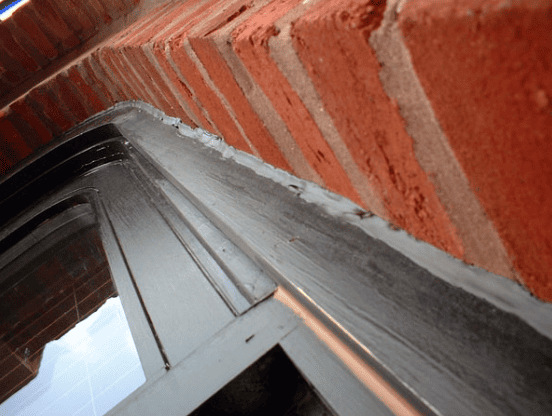
How Winter Weather Exposes Hidden Masonry Damage
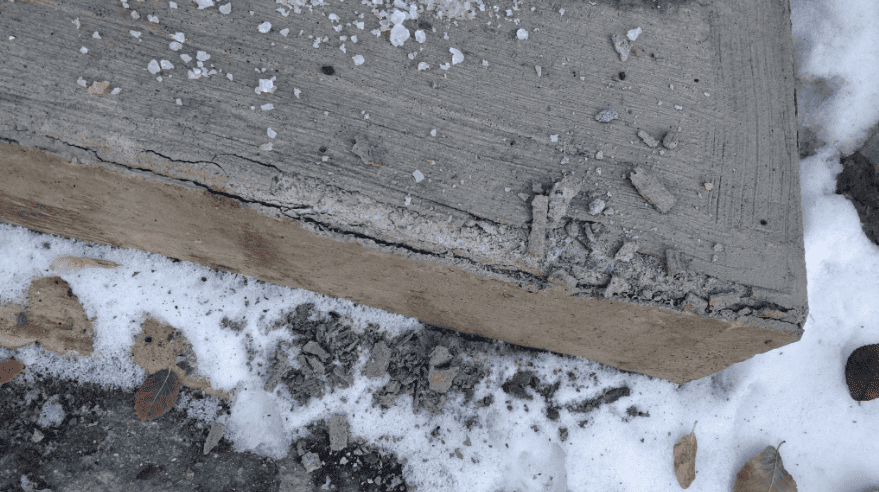
Why Winter Weather Reveals Problems You Can’t See the Rest of the Year
Chicago’s winters put masonry under stress you don’t notice during warmer months. Freeze–thaw cycles, wind off Lake Michigan, and rapid temperature swings cause movement inside brick, block, stone, mortar, and concrete. When these forces push against weak points in the façade, underlying issues surface, sometimes overnight.
Winter doesn’t create every masonry problem. It exposes the ones already forming behind the surface.
How Freeze–Thaw Cycles Damage Brick and Mortar
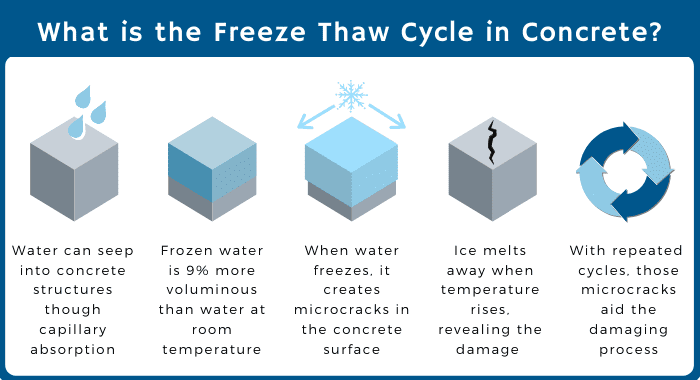
Chicago regularly shifts above and below 32°F throughout winter. That temperature swing is where most hidden damage begins.
Moisture Expansion Inside Masonry
The National Institutes of Health states that when water seeps into cracks, porous brick, or deteriorated mortar joints and freezes, it expands up to 9%. That expansion widens the voids, weakens bonds, and compounds structural stress.
Common signs that show up only after freeze–thaw pressure builds:
- Sudden cracking or step-cracks along walls
- Mortar joints turning sandy or powdery overnight
- Chunks of brick spalling off the face
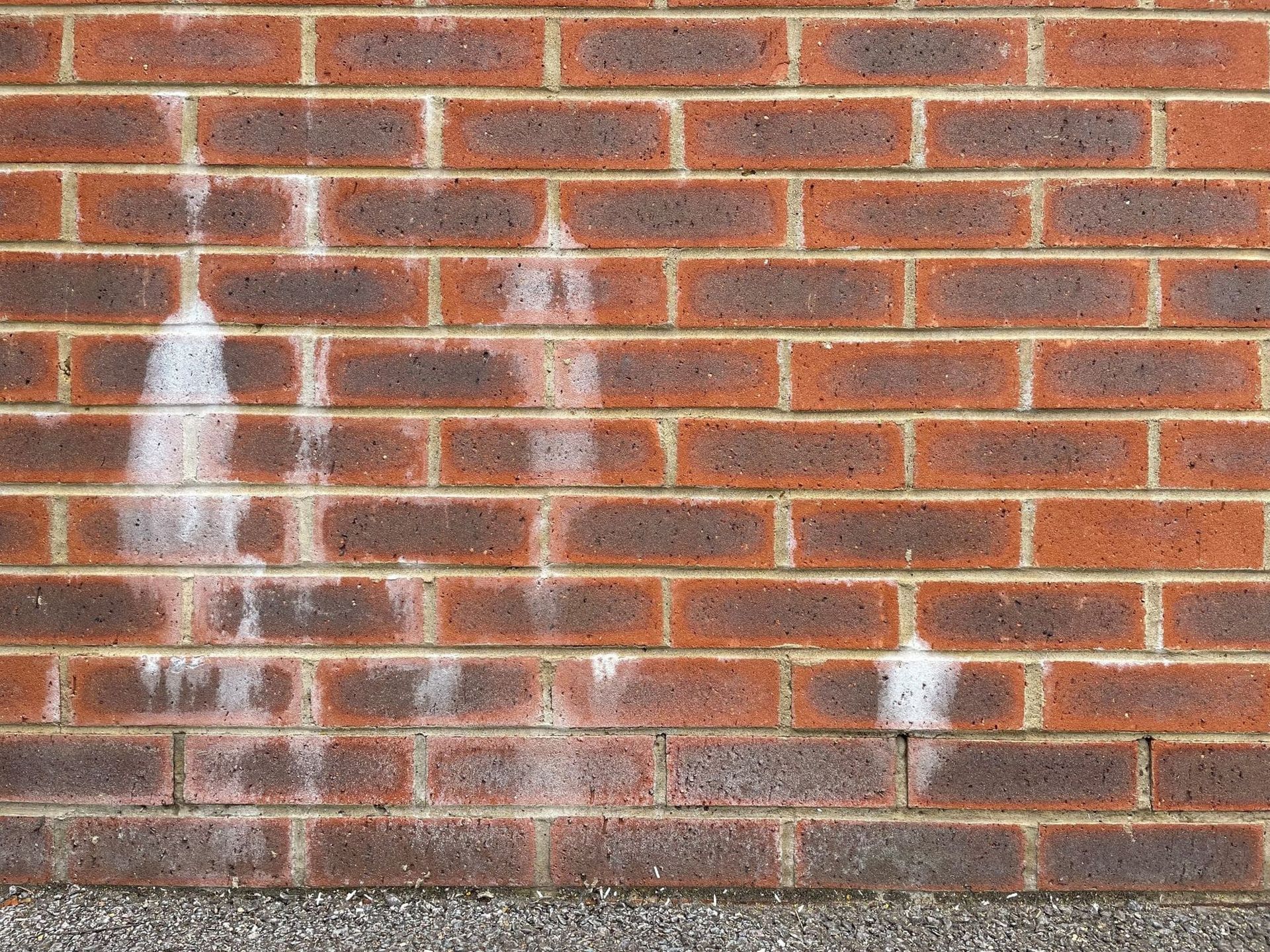
- New drafts, leaks, or efflorescence after snow or heavy temperature drops
Why These Issues Often Stay Hidden Until Winter
During fall, walls may look stable. But trapped moisture becomes destructive only when temperatures dip. Once the façade starts to cycle between freezing and thawing, minor voids become obvious failures.
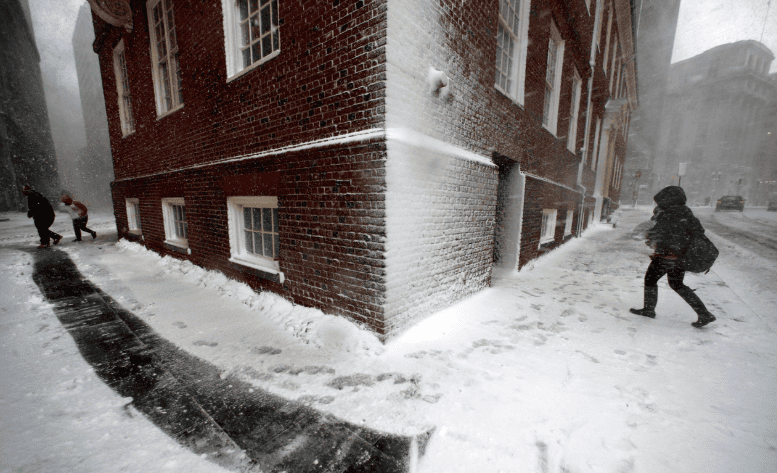
Lake Michigan Winds Accelerate Masonry Breakdown
Wind-driven snow and moisture can penetrate deeper into walls, especially on high-rise, lakefront, and open-exposure buildings.
Chicago’s winter winds:
- Force moisture into hairline cracks
- Increase thermal shock on exposed elevations
- Push icy precipitation into parapets, flashing, and window sills
- Erode weak mortar faster than sheltered areas
This is why east and northeast elevations usually show the first signs of damage each winter.
According to reporting from the National Weather Service, lake-effect systems across the Great Lakes can generate strong north and northwest wind events as cold Canadian air moves over the warmer lake surface. These winds can reach 45 mph near the lakeshore and often carry dense, wind-driven snow bands, which are conditions that push moisture deeper into masonry and amplify freeze–thaw deterioration on Chicago’s lake-facing elevations.
Why Winter Reveals Problems With Lintels, Shelf Angles, and Flashing
Many structural components are buried behind masonry. Winter tests them in ways no other season does.
Steel Lintels and Shelf Angles
Steel expands when exposed to temperature swings. According to data from The Engineering Toolbox, steel expands measurably as temperatures rise and contracts as they fall. When that movement is restrained inside a masonry wall, it creates internal pressure that can crack surrounding brick or mortar. If the steel is already rusting or losing its protective coating, winter accelerates corrosion and increases the force exerted on the masonry.
Common winter red flags:
- Cracked brick above window heads
- Bulging or displacement near steel supports
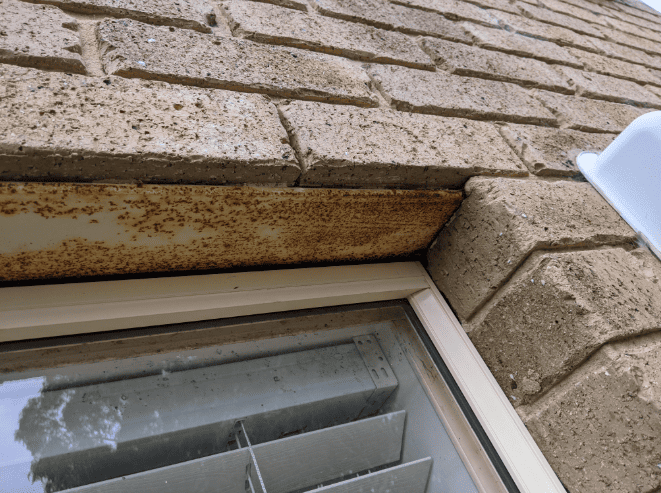
- Rust staining appearing after a thaw
- New air or water infiltration during storms
Flashing and Waterproofing Systems
Winter exposes failed or missing flashing because melt water has only one path, which is into the wall.
Signs often show up during early or late winter thaws:
- Indoor leaks that disappear once temperatures re-freeze
- Damp interior drywall
- Efflorescence around shelf angles or masonry openings
Hidden Structural Movement Becomes Visible in Cold Weather
As temperatures drop, different building materials contract at different rates. Masonry, concrete, steel, and even adjacent systems like foundations or floor framing all respond differently to cold weather. When those materials move out of sync, winter exposes the stress that has been quietly building behind the wall.
Industry guidance from the Concrete Masonry & Hardscapes Association on crack behavior in concrete masonry notes that cracking is often linked to restrained movement, which is when the wall wants to shrink or contract but something is holding it in place. Common sources of restraint include foundations, floor diaphragms, corners, and intersections. Winter magnifies these stresses because cold temperatures accelerate masonry contraction.
Watch for signs of winter-related movement:
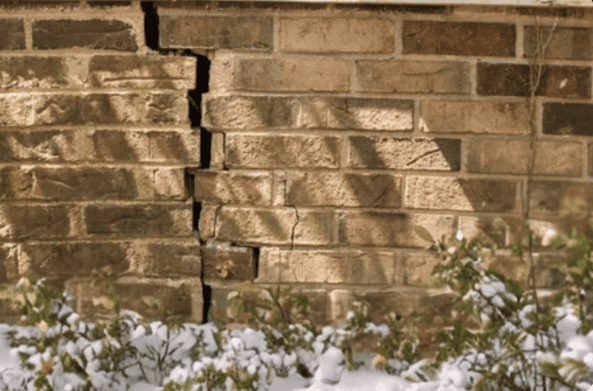
- Cracks widening during extreme cold
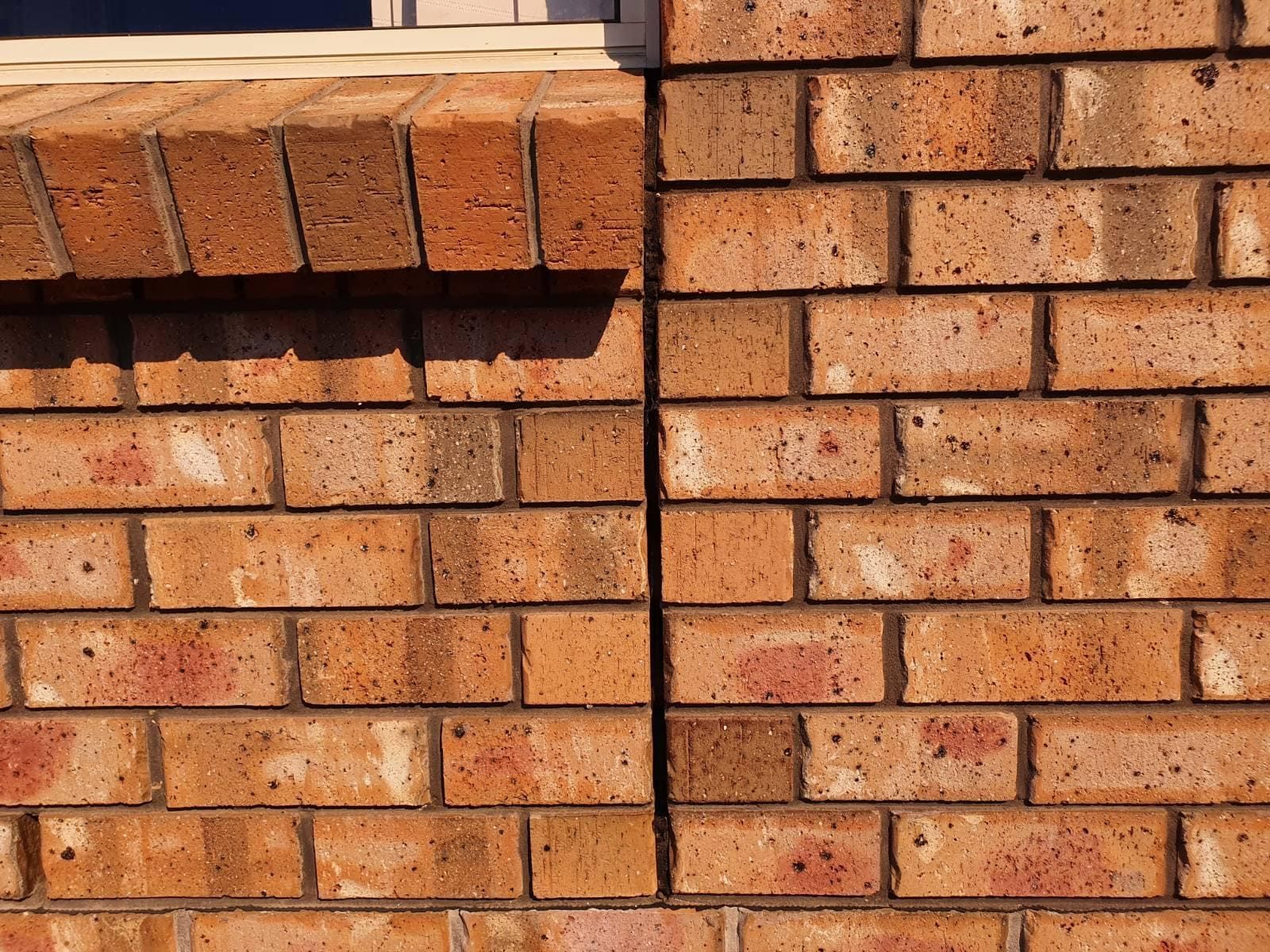
- Vertical cracks near control joints or where a joint is missing
- Stair-step cracking at transitions or corners
- Doors and windows sticking on frigid days due to frame distortion
Concrete masonry also undergoes volume changes from moisture loss, thermal contraction, and carbonation (a long-term chemical reaction). These movements are normal, and problems arise when the wall can’t move freely. That’s why crack-control strategies (such as properly placed joints and horizontal reinforcement) exist in new construction.
For existing buildings, what looks like a “new crack” is often a long-developing movement issue that winter finally makes visible. Cold weather doesn’t automatically mean something failed, it simply reveals where the system has been under stress.
Why Chicago’s Historic Buildings Show More Winter Damage
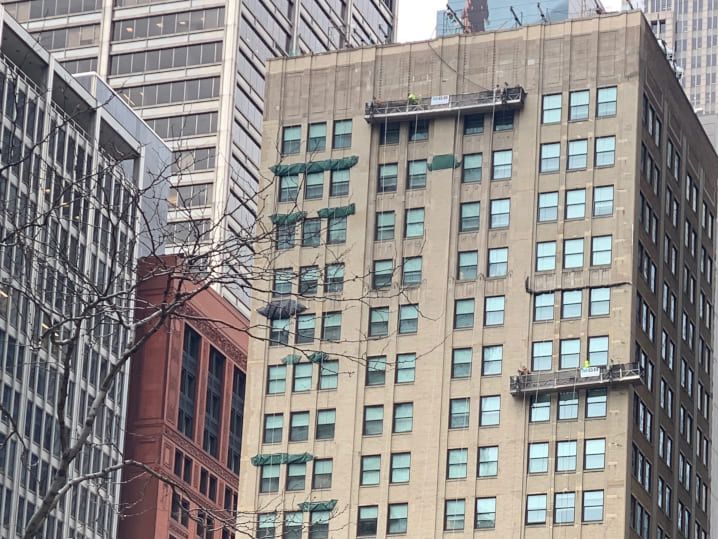
Older Chicago buildings, especially in neighborhoods like Ravenswood, Wicker Park, Logan Square, and the South Loop, often have:
- Softer, more porous brick
- Lime-based mortar that absorbs moisture differently
- Outdated flashing or no flashing
- Settling patterns that react sharply to cold
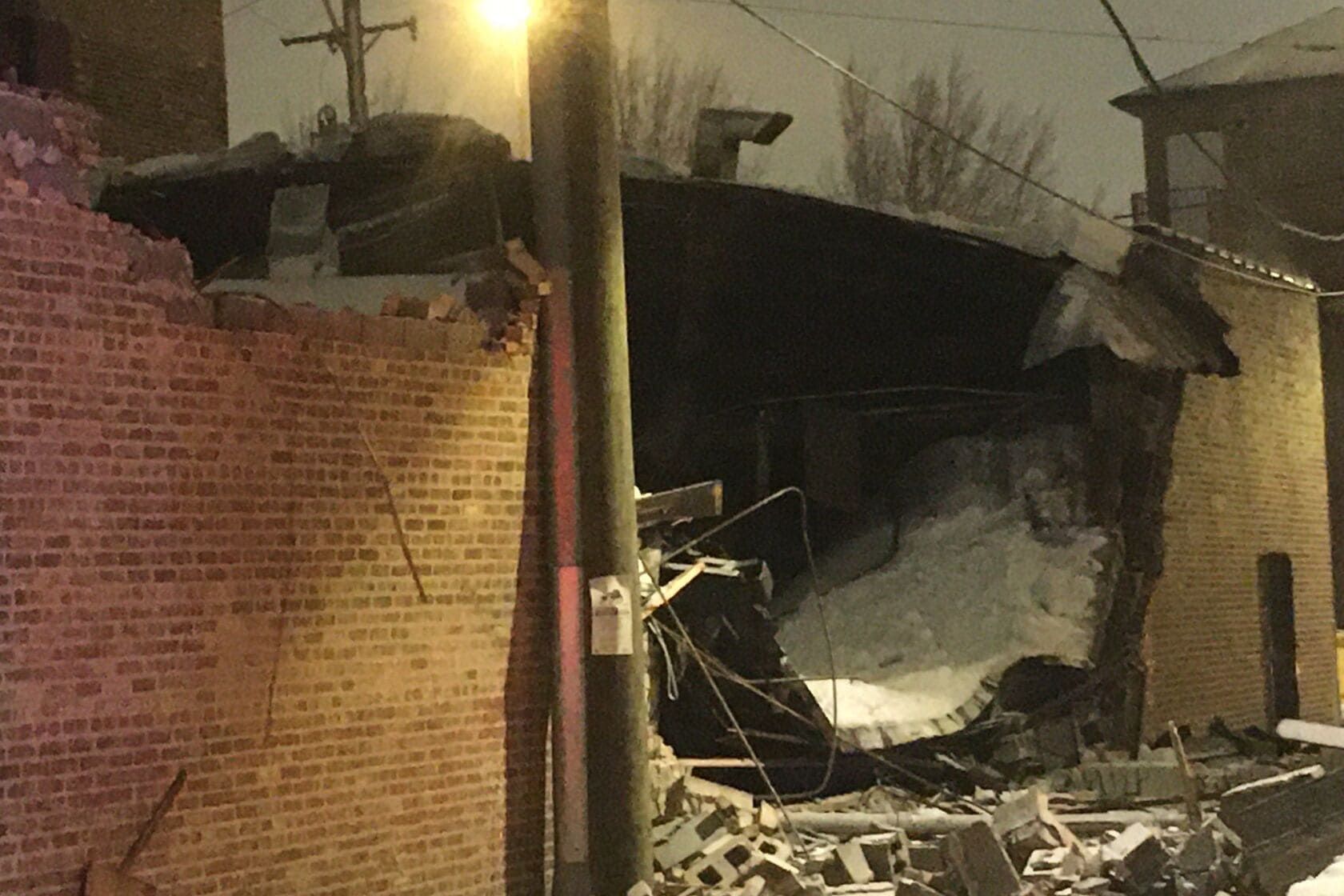
Their masonry systems weren’t built for modern freeze–thaw extremes. That makes winter an important diagnostic window for planning spring restoration.
When Property Managers Should Investigate Winter Masonry Damage
A building doesn’t need to be actively failing for winter to reveal risk. Call a masonry restoration contractor if you notice:
1. New cracking after a hard freeze
Even minor cracks can indicate expanding moisture inside the wall.
2. Spalling or flaking brick after snowstorms
This often means saturation + freeze–thaw pressure.
3. Water infiltration during melts
Meltwater follows weaknesses in flashing, deteriorated joints, and hidden voids.
4. Drafts or temperature fluctuations inside units
Air pathways often come from deteriorated masonry envelopes.
5. Rust staining near steel lintels or supports
Corrosion expands and pushes brick outward, and winter exposes this quickly.
How Chicago Buildings Benefit From a Winter Masonry Assessment
A winter assessment helps you understand what damage the season has already exposed and what issues need attention before spring. Winter weather puts the entire building envelope under stress, not just the masonry. As 33 Realty notes for multifamily owners, Chicago’s freezing temperatures, ice, and snow can trigger a cascade of problems that threaten property integrity and tenant safety. Masonry issues are often the first warning signs of those broader building-wide stresses.
A qualified restoration team can:
- Identify early-stage cracking and movement before it spreads to adjacent materials.
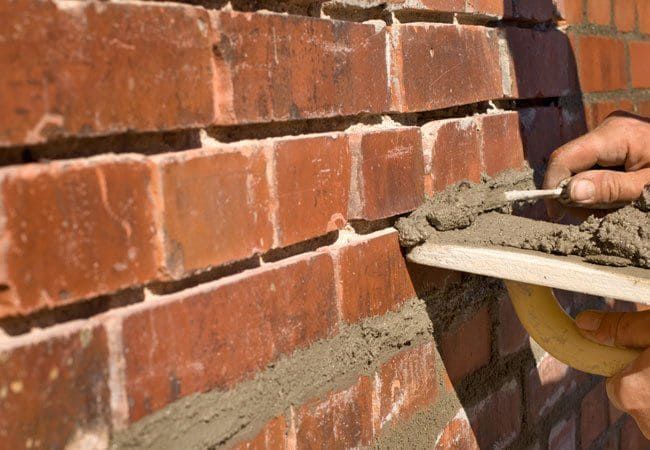
- Evaluate mortar deterioration caused by freeze–thaw cycling and winter moisture.
- Check lintels, flashing, and sealants, which often fail under the same conditions that cause pipe freezes, heat loss, and exterior drafts.
- Compare seasonal movement from past inspections to determine whether cracks are stable or worsening.
- Pinpoint envelope weaknesses that contribute to winter problems owners already worry about, such as drafts, heat loss, or water intrusion near windows and walls.
- Prioritize repairs for spring budgeting, preventing the emergency calls that typically hit in late winter.
A winter assessment gives property managers the same kind of early-warning advantage that 33 Realty emphasizes for winter preparation, catching issues before they escalate, stabilizing building performance, and avoiding reactive repairs during peak season. This helps managers plan a controlled, cost-effective restoration season, not rush into emergency work in April.
Frequently Asked Questions
How does winter weather affect brick buildings?
Winter weather causes hidden moisture inside brick and mortar to freeze and expand, which widens cracks, weakens joints, and exposes underlying deterioration. Chicago’s freeze–thaw cycles make this worse, often revealing problems that were invisible during warmer months.
Why do cracks in my building appear after cold weather?
Cracks often become visible after freezing temperatures because trapped moisture expands as it turns to ice. This pressure forces the masonry to separate. Cold weather also causes building materials to contract, which can expose structural movement.
Is it safe to repair masonry in the winter?
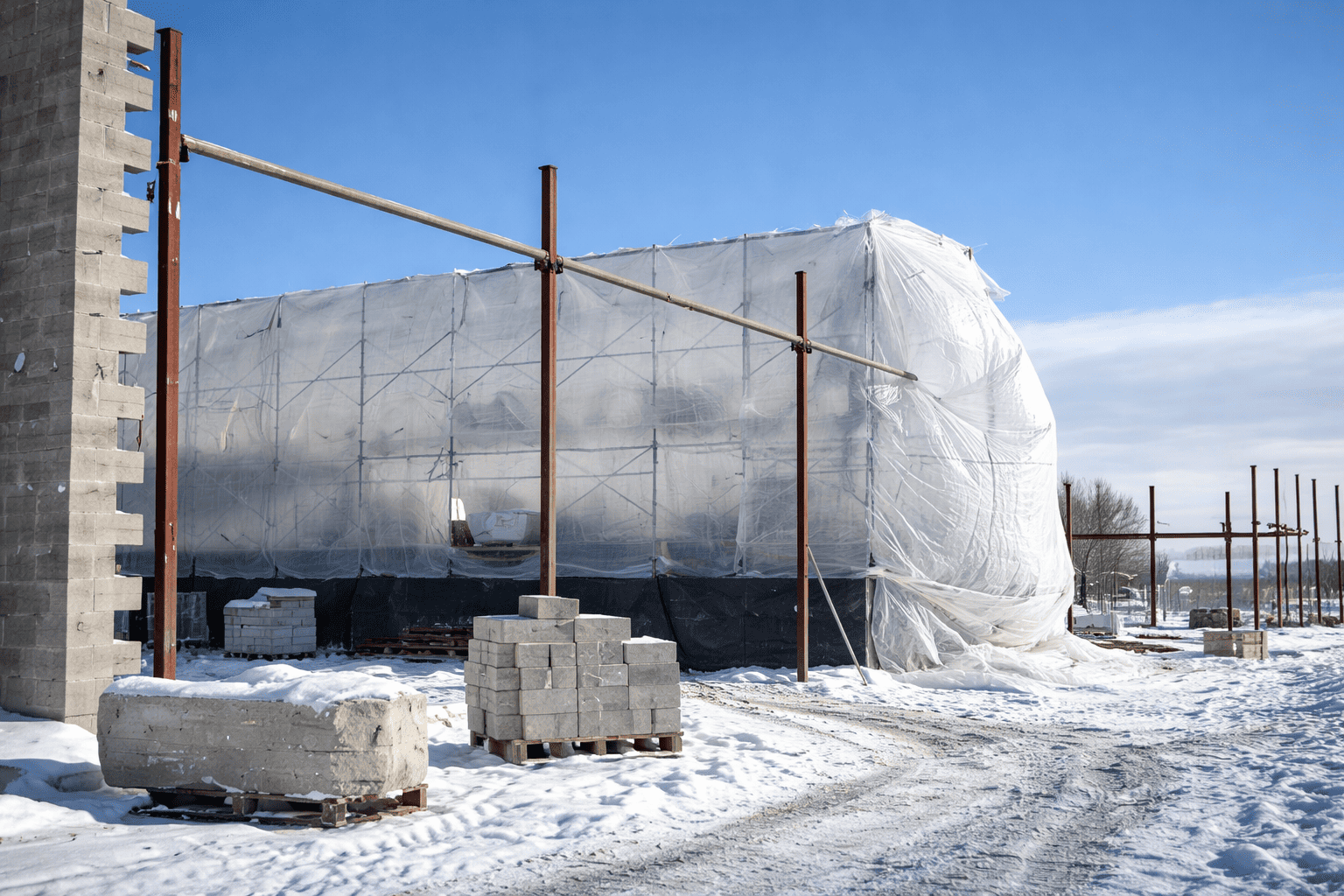
Some repairs can be done in winter with heating and protection, but most long-term restoration work is scheduled for spring. Winter is best for diagnosing issues and planning repairs before warm-weather demand increases.
Should I get a masonry inspection in winter?
Yes. Winter is one of the best times to identify hidden deterioration. The cold, moisture, and freeze–thaw cycles reveal weaknesses you won’t see in summer, helping you plan accurate spring repairs.
If you have more questions, contact RestoreWorks today.